Why Scanning is Needed
Modern applications rely heavily on Docker images and open source packages. That also means inheriting their vulnerabilities.
A single outdated package or insecure base image can expose your systems. Scanning your containers and dependencies for known vulnerabilities helps catch these issues early, before they reach production.
Whether you are running internal services or deploying cloud workloads, scanning should be a default part of your workflow.
Popular Vulnerability Scanners
There are many tools available today. Some are fully open source. Others are commercial platforms with dashboards, policies, and automation.
Below is a clear, practical comparison of the most popular scanners for Docker images and package repositories.
RepoFlow currently supports Grype for scanning. If there is another tool you would like to see supported, let us know at hello@repoflow.io.
| Tool | Package Type Supported | UI and CLI | Open Source | Free or Paid |
|---|---|---|---|---|
| Grype | Docker + 10 more types | Only CLI | Free | |
| Trivy | Docker + 8 more types | Only CLI | Free | |
| Snyk | Docker + 5 more types | 💰 | ||
| JFrog Xray | Docker + 19 more types | 💰 | ||
| Docker Scout | Docker only | Free | ||
| Clair | Docker only | Only CLI | Free | |
| Anchore Enterprise | Docker + 10 more types | 💰 | ||
| Aqua Security | Docker + 10 more types | 💰 Freemium* |
Note: Aqua Security uses the open source Trivy scanner as part of its platform. While the full Aqua Platform is commercial, it offers a limited free tier for individual use.
Scanning in RepoFlow
RepoFlow includes built-in vulnerability scanning for Docker images and packages. When viewing a package in the UI, you can trigger a manual scan directly from the package page.
Here is how it works behind the scenes:
- RepoFlow uses Syft to generate an SBOM
- It runs a vulnerability scan using Grype
Scan results show up in the UI with clear severity levels and CVE details. You do not need to configure anything to run a scan. Support for additional scanners is planned. If there is one you would like us to add, let us know at hello@repoflow.io.
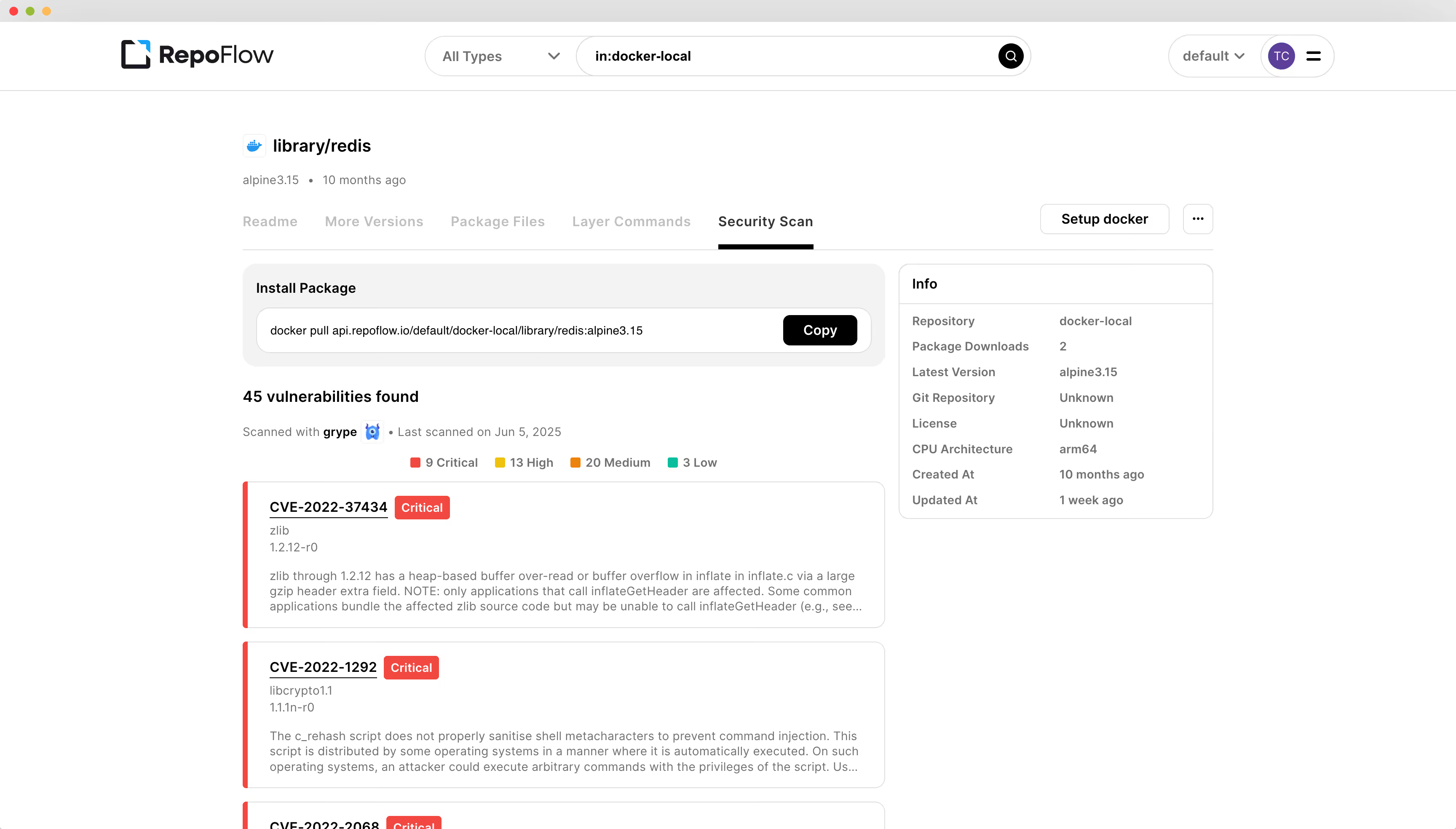
RepoFlow scan results